Ceramic Mug Labels: What the Product Must Say and What Paper Must Sit in the File for the EU, UK and US
The Label Is the Cheapest Line Item in Your Compliance Budget, and the One Most Often Skipped
A food-contact ceramics program is judged by its test reports: the migration test comes back clean, the pre-shipment inspection passes, the cartons drop without a crack. Then the mugs sit on a retail shelf with a label that says only the colour and the price, because nobody in the supply chain was told that a mug entering the EU carries its own labelling duties, that the US treats origin marking differently from Europe, and that the document a regulator asks for by name is not a certificate but a short written declaration. Labelling is the cheapest part of compliance - a printed line on the base or a panel on the retail box costs cents - and it is where shipping delays, customs holds and market-surveillance letters most often start, because an inspector can check a label without a laboratory.
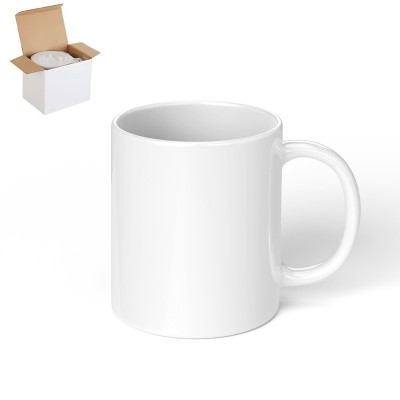
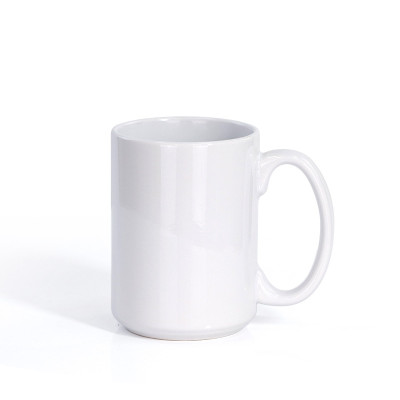
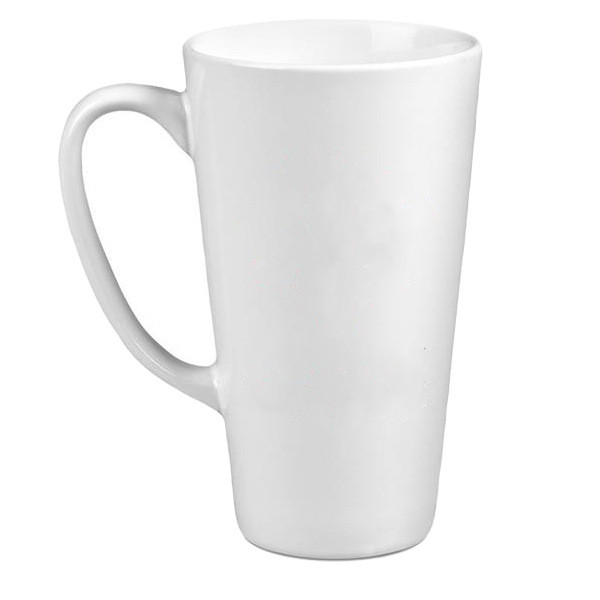
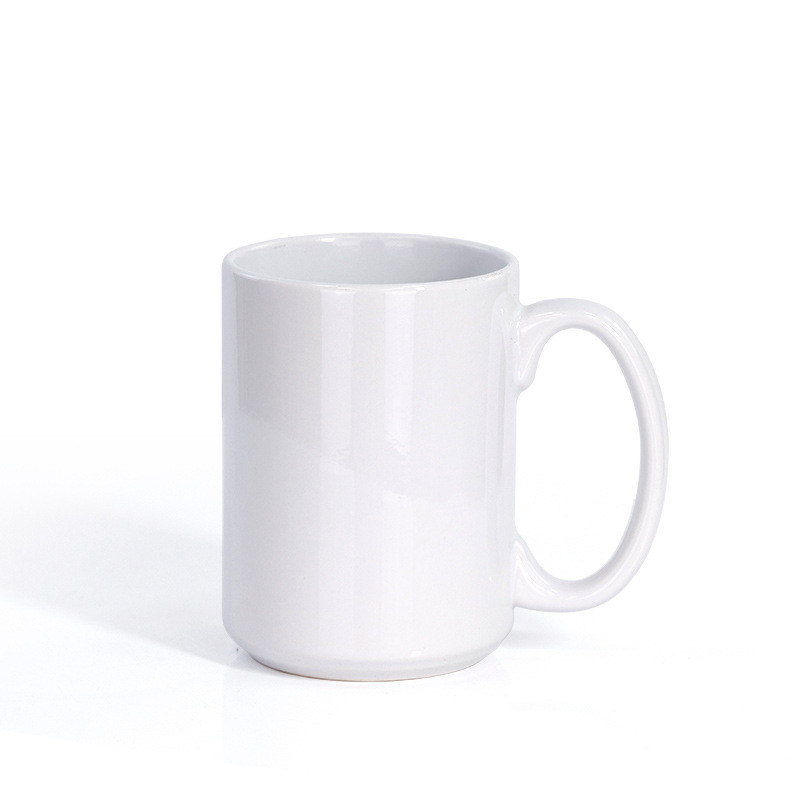
Products in this guide: Blank Sublimation Latte Mug · 15oz Sublimation Blank Ceramic Mug
This insight is for sourcing and import teams buying food-contact ceramic mugs for the EU, the UK and the US. It covers what has to sit on the product or its packaging, what has to sit in the paperwork behind it, and what to ask the factory before the purchase order is signed. It is a plain-language summary of the publicly available EU, UK and US requirements as they stood in their official published versions in September 2026; it is not legal advice, and the obligation on a given importer should be confirmed with counsel and the regulator's current guidance before any label is printed.
The article is deliberately narrow. It does not cover how to obtain the underlying tests or certificates - our EU certification guide and our FDA and LFGB certification guide do that. It answers the two questions those guides assume are settled: what the label must say and where the information must live, and what the declaration of compliance must contain, who signs it and when it is renewed.
What a Food-Contact Mug Must Carry in the EU
The starting point is the framework regulation on food contact materials, Regulation (EC) No 1935/2004. Article 15 is the labelling provision, and it applies to materials and articles that have not yet come into contact with food when placed on the market. For a mug that is the normal state of the product through the whole chain - an empty mug has not yet touched food - so the duty runs from the factory gate to the consumer's cupboard. Article 15(1) sets out what must accompany the article:
- (a) either the words "for food contact", a specific statement of the intended use, or the glass-and-fork symbol shown in Annex II;
- (b) where necessary, any special conditions of use;
- (c) the name or trade name and the address or registered office of the manufacturer, processor or seller responsible for placing the article on the market and established in the EU;
- (d) adequate labelling or identification allowing the article to be traced in line with Article 17;
- (e) information on any active materials used, which in practice does not apply to a ceramic mug.
Three details matter to a mug buyer. First, Article 15(2) says the intended-use information in point (a) is not required where the article is clearly identifiable by its nature as intended for food contact; a glazed mug with a handle is about as clear as it gets, yet many brands print the glass-and-fork symbol anyway because it costs nothing, travels across languages and removes the argument. Second, point (c) is what importers discover late: someone established in the EU must be named on the article or packaging, with a real address. A Chinese factory cannot supply that identity, so the EU import arm of the buying company usually appears there. Third, Article 15(3) sets the quality bar: the information must be conspicuous, clearly legible and indelible. A curling sticker, a smudged print or a colour-on-colour plate fails even when the words are right.
Article 15 also says where the information can live, and the answer differs by channel. At retail, Article 15(7) allows it on the article, its packaging, an attached label, or a notice clearly visible in the immediate vicinity - except that the name-and-address element of point (c) may go on a nearby notice only where it is technically impossible to put it on the article or packaging. The practical reading is simple: put everything on the retail pack or the article. Before retail, Article 15(8) allows the information to travel in the accompanying documents, on the label or packaging, or on the article itself - which suits promotional consignments to a distributor, where most of Article 15 can ride in the commercial paperwork.
Language is a retail question. Article 15(4) requires retail information in a language easily understood by purchasers and lets member states designate official languages; Article 15(5) allows several languages. The glass-and-fork symbol is the only genuinely language-neutral element, so a brand selling retail across member states ends up with multilingual text, the symbol, or picture-based statements of any special condition.
Behind the label sits Article 17, traceability: every operator must be able to identify the businesses it was supplied by and supplied to, and articles must be traceable by label or documentation. In a sourcing file, this is the legal basis for a batch or production code on the retail pack that ties back to the factory's records - the same code that decides the cost of a recall (see our product recall guide). And Article 3 adds the safety duty the label only certifies: the article must not release constituents in quantities that endanger health, alter the food or deteriorate its taste or odour. That is proven by migration tests, not printed on the label.
The Declaration of Compliance: the Paper Regulators Ask for by Name
On top of the framework regulation, ceramic articles have their own harmonised measure: Council Directive 84/500/EEC, as amended by Commission Directive 2005/31/EC, covering exactly what a mug is - inorganic material with a high proportion of clay or silicates, formed and fired to fix it permanently, whether glazed, enamelled or decorated. The directive does two things. It sets the lead and cadmium migration limits - varying across three categories of article shape, tested with a 4% acetic acid solution, with the 2005 amendment tightening analytical performance criteria such as limits of detection and quantification and recovery rates. And it creates the document most trade files never contain: the written declaration of compliance, the DoC.
The DoC is not a test certificate, although a test report normally sits behind it. It is a short written declaration, and for ceramics it is legally required: at retail and at every stage before it, ceramic articles not yet in contact with food must be accompanied by a written declaration issued by the manufacturer or a seller established in the EU. For a buyer whose factory is in China and whose selling entity is in the EU, that almost always means the EU importer signs - which is why the DoC is a buyer's document to manage, not a factory extra to be added to the quote.
The contents, set out in Annex III, fit on one page: the name and address of the company that manufactured the articles and of the importer into the EU; the identity of the articles; the date; and a statement confirming compliance with the directive and Regulation (EC) No 1935/2004. No test values and no laboratory name appear on it. Those sit in the supporting file, because Article 2a(2) requires the manufacturer or importer to give the competent authority, on request, the test results, the testing conditions and the name and address of the laboratory. File one page of DoC per article with the matching test report behind it.
The DoC is a living document. It must be updated when production changes substantially affect lead or cadmium migration - a new glaze, a new decoration supplier, a different clay body or a changed firing profile can all qualify. This matters especially on blank-mug programs: if you decorate after import, as with the sublimation-ready blanks we supply, the factory's declaration and test evidence describe the article as shipped, before your decoration - and your decoration is a variable worth verifying against that migration profile. Treat the DoC as an SKU-level document tied to a production change, and ask for a fresh one whenever the specification changes.
The United Kingdom: Same Content, Assimilated Law
For a mug going to the United Kingdom, the rules do not restart from zero. The EU framework regulation and the ceramics directive continue in the UK in their retained form as assimilated law, and in practice the label content and written declaration that satisfy the EU file carry over to a mug sold in Great Britain with one substitution: the operator named and issuing the declaration becomes the operator established in the UK. Northern Ireland is a separate question to confirm for each arrangement, not to assume from the Great Britain file.
EU documentation converts into UK documentation quickly when the structure is right: same wording, same article identity, new party details and date. The reverse should not be assumed - a file built only for the UK is not automatically valid in the EU. A program selling both markets keeps two declarations sharing the same test reports, at near-zero marginal cost.
The United States: Three Different Questions
The US asks different questions, and the commonest mistake is copying an EU habit into a US program or the reverse. There is no EU-style DoC duty and no "for food contact" wording requirement. The FDA runs no pre-market clearance for ceramic foodware at all: lead and cadmium are controlled through the enforcement action levels the agency has set, supplemented by published guidance and import alerts, so products are policed at the border rather than licensed in advance. That is a testing-and-entry reality, covered in our FDA and LFGB certification guide. What the US does require, in labelling terms, comes in three pieces.
The first is customs marking. Under 19 CFR Part 134, every article of foreign origin imported into the US must be marked in a conspicuous place, legibly, indelibly and as permanently as the article's nature permits, with the English country of origin - for a mug made in China, "Made in China". The obligation sits with the importer of record, and an unmarked article can attract an additional marking duty and be detained until corrected. For a mug the article itself is the natural home of the mark: pad-printing or laser-etching the base is standard, because a mug outlives its packaging.
The second is the California warning. Proposition 65, the Safe Drinking Water and Toxic Enforcement Act codified in the California Health and Safety Code, requires a clear and reasonable warning before a business exposes a consumer to a listed chemical, and lead and cadmium are both listed. For a mug whose glaze or decoration may expose a user to these, California retail is the exposure scenario the warning addresses, and California's safe-harbour warning formats remove most of the guesswork. For brands selling through national chains this is the labelling obligation most worth planning, because chain distribution does not stop at state lines.
The third is a discipline beside the label: with no pre-market clearance, the migration test evidence the buyer holds is what answers a customs examination or an FDA import question. In the EU file that evidence sits behind a formal DoC; in the US there is no equivalent wrapper, so keep the same evidence organised, current and matched to each shipment.
And the reverse of the marking habit: the EU and UK generally do not impose a "Made in China" style origin mark on consumer-facing ceramics - country of origin is customs declaration data there, not a retail labelling duty. Adding it to EU artwork does no harm, but assuming the EU label must carry an origin stamp like the US one, or that a US import needs an EU-style declaration, is modelling the wrong market.
What the Purchase Order Should Say About Labels
None of this becomes a product on its own, and the label is the item that falls between factory and buyer unless the purchase order assigns it. Decide at specification stage where each market's information will live and write it down. For an EU retail pack, print the intended-use information (words or glass-and-fork symbol), the EU-established operator's name and address, any special conditions of use and a traceability code on the packaging, with nothing critical on a removable sticker. For a US-bound mug, the origin mark goes on the base of the article. Ask the factory for a label proof or artwork mock-up for approval before mass production - the same discipline as a decoration proof - and check it against a written checklist, because the errors in this field are omissions: no address, no language, no origin.
Specify the printing and placement the way you specify the glaze. The EU wants information that is conspicuous, clearly legible and indelible; the US wants marking that is conspicuous, legible, indelible and permanent - a removable paper sticker fails both if it is the only carrier. If the artwork is on the mug, specify ink that survives the dishwasher; if it is on the retail pack, test a finished pack on the actual material.
Name the party behind each declaration. The DoC is signed by the manufacturer or the seller established in the relevant market; where the factory is in China, the buyer's EU or UK entity is normally the issuer. Say in the purchase order which party signs, and limit the supplier to what only it can provide: migration test results, testing conditions, the laboratory's identity, and written notice of any production change requiring an updated declaration. Ask for the declaration to travel with the shipment, matched to the goods.
Decide the destination questions in the same document: the EU retail language and the California Proposition 65 decision are calls no factory in China can make for you, and should be answered before the artwork freezes. Finally, verify at the receiving end: a label check belongs in the arrival inspection - is the wording exactly as approved, on the right article in the right position, legible on the fired surface, rub-resistant, and is the origin mark present on US-bound goods? Label defects are the cheapest to catch and among the most expensive to miss.
The Buyer's Labelling and Documentation Checklist
- Decide per market and per SKU where the information will live - on the article, the retail pack or the accompanying documents - because retail and non-retail routes are treated differently.
- For EU-destined retail, verify the Article 15 set: intended-use words or glass-and-fork symbol, any special conditions, the name and address of the EU-established operator, and a traceability code.
- Confirm the retail language matches the member state's requirement, using the symbol or multilingual text where needed.
- Establish one written declaration of compliance per article, signed by the manufacturer or the EU-established seller, with the Annex III elements - article identity, parties, date and compliance statement - and file the migration test results, testing conditions and laboratory identity behind it, updating it whenever a production change affects lead or cadmium migration.
- Confirm the UK file under assimilated law mirrors the EU content with UK party details, and treat Northern Ireland separately for each arrangement.
- For US-bound goods, mark each article "Made in China" conspicuously, legibly, indelibly and permanently - base printing or etching - as the importer of record's responsibility.
- If the goods will reach California retail, plan the Proposition 65 clear-and-reasonable warning, using the safe-harbour formats where certainty is needed.
- Put the label position, ink durability and the party responsible for each declaration into the specification and purchase order, and check the finished label against the approved proof at arrival inspection.
None of this costs more than the ink itself. The label is the part of compliance that fits in a printing quote, and the DoC fits on one page - which is why the cheapest line item in the program is the one worth writing down first.
"Blank Ceramic Mugs, Ready for Your Own Label"
Explore products featured in this guide:
Have questions? See our Sizes & Finishes FAQ and Ordering & Certifications FAQ.
Need a custom quote? Send an inquiry or browse our full product catalog.