CBAM and the Ceramic Buyer: The Carbon Data to Prepare Before Anyone Asks for It
The Question Arrives Before the Regulation Does
Every few years a new requirement lands on the desk of the sourcing team, and the first job is always the same: work out whether it actually applies to a mug. The EU's Carbon Border Adjustment Mechanism - CBAM - is the current case, and the honest answer for ceramic tableware is that it does not apply today. The temptation is to close the file and move on. That would be a mistake, because the buyers who are asking ceramic suppliers for carbon numbers are mostly not asking because of CBAM. They are asking because their own Scope 3 reporting needs it, because their retail or hospitality customer has made a public reduction commitment, or because a tender scoring sheet now has a line on it. This insight draws the line clearly between the two: what the regulation covers, what the market is asking for regardless, and which kiln-side numbers a ceramic program can start collecting now at almost no cost. It reflects EU and Commission guidance publicly available as of September 2026; the mechanism is still being built out, so treat any figure here as a position to confirm with your own compliance contact rather than a settled number.
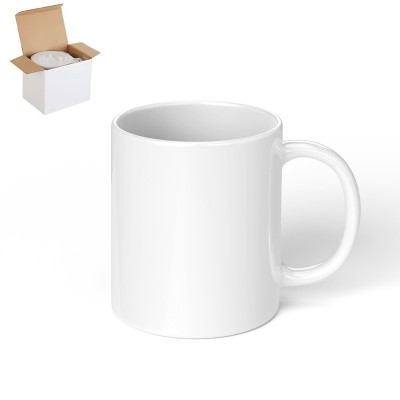
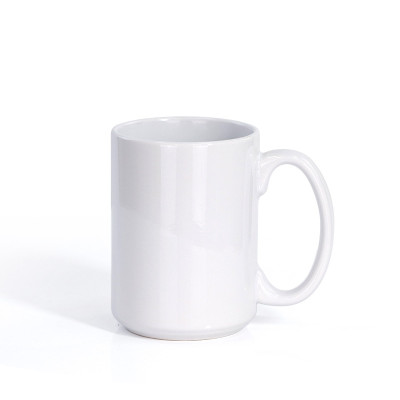
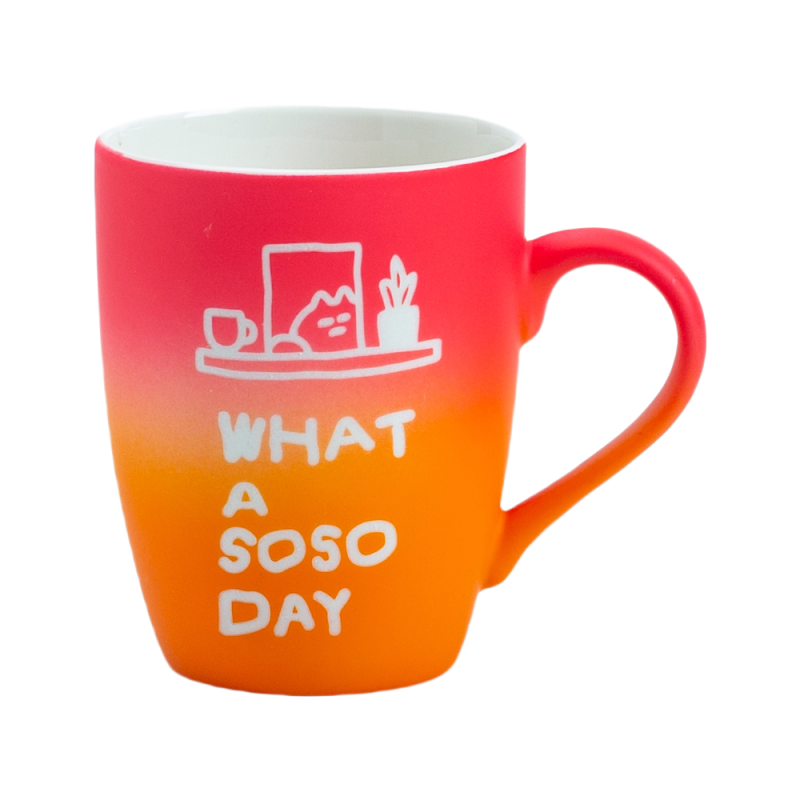
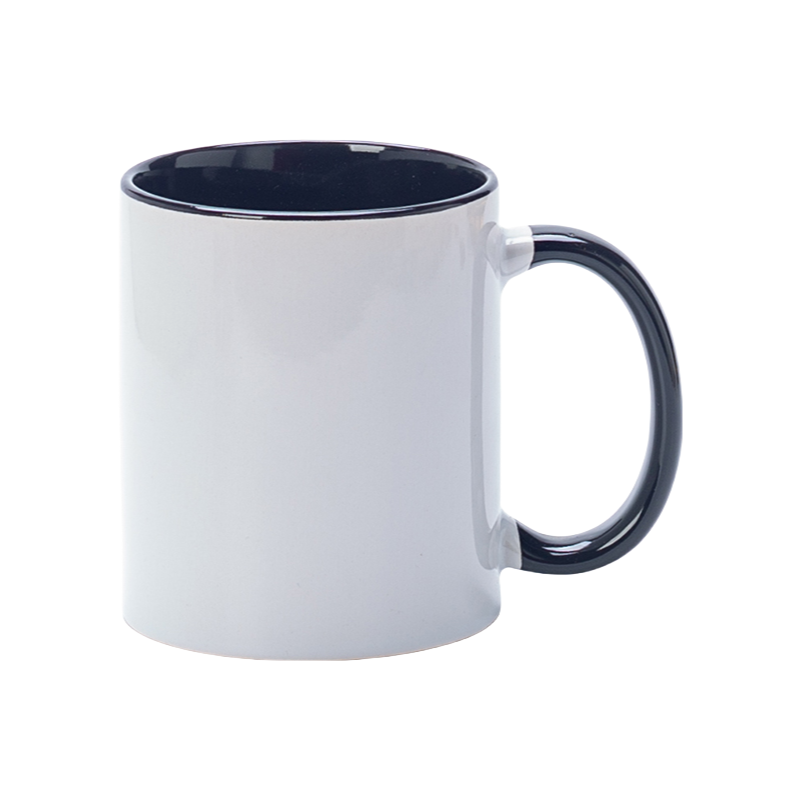
Products in this guide: Gradient Ceramic Mug · 11oz Sublimation Color Handle Mug
Where Ceramics Actually Sits in CBAM
CBAM entered its definitive regime on 1 January 2026, after a transitional period from October 2023 to the end of 2025 in which importers only reported. The mechanism puts a carbon price on the emissions embedded in certain imported goods by requiring the importer to buy and surrender CBAM certificates. The critical detail for this industry is the scope: the goods covered are limited to listed product categories in six sectors - cement, iron and steel, aluminium, fertilisers, electricity and hydrogen. Ceramic tableware under the ceramic headings is not among them, and there is no indirect route in through the clay, the feldspar or the glaze as such, because coverage runs to the listed goods rather than to every input they contain.
| The question | The position for ceramic tableware |
|---|---|
| Is ceramic tableware covered by CBAM today | No - the listed goods sit in six other sectors |
| Does the importer need a CBAM declaration for a mug shipment | No, unless other covered goods are in the same import activity |
| Can coverage change | The scope is set by legislation and any extension would have to be legislated |
| Is the buyer being asked for carbon data anyway | Increasingly yes, from retail and hospitality customers and from Scope 3 reporting |
| Does the factory have a verified carbon footprint | Usually not - and that is the honest starting point |
Two more mechanics are worth knowing even for an exempt buyer, because they explain the pressure that is coming. The first is the de minimis threshold introduced by the simplification package: importers below a mass threshold of 50 tonnes of goods per year are exempt, which removes the administrative load from the large majority of importers - mostly smaller ones - while leaving the great bulk of embedded emissions inside the system. The second is default values: where an importer cannot supply verified installation data, the mechanism applies conservative default values, and conservative in this context means higher, not lower. That design choice is the whole argument for collecting real numbers early - the penalty for having no data is that someone else's pessimistic estimate becomes your cost.
Why the Exemption Is Not a Reprieve
The regulation is not where the pressure comes from, and it is worth being precise about where it does come from. A European retail group that has committed to reducing value-chain emissions has to account for the products it resells, whether or not a border mechanism touches them. A hotel group reporting to its own investors needs a number for the tableware it buys in volume. Tender documents increasingly include an environmental question, and a supplier who can answer it scores. None of that is CBAM, and none of it disappears because ceramics is outside the scope. What these customers usually want is not an audited certificate - it is a defensible number with a stated method, per piece, that they can carry into their own reporting. That is a much lower bar than it sounds, and it is one a ceramic program can clear.
What a Product Carbon Footprint Actually Contains
A product carbon footprint answers one question - how much greenhouse gas was emitted to make and deliver one unit - and the credibility lives entirely in the two words nobody reads: system boundary. The standard frame for a product footprint is cradle-to-gate: everything from extracting the raw material up to the moment the finished piece leaves the factory gate. For a ceramic mug that breaks into a handful of stages, and the shape of the answer is more useful than the number itself.
- Raw materials. The clay body minerals and the glaze materials, and the emissions from winning and processing them before they ever reach the factory.
- Body preparation and forming. The energy of preparing the body and shaping the piece.
- Firing. The dominant step in most ceramic footprints, and the one with real data behind it, because the kiln has a meter and a fuel bill (see our kilns and firing guide).
- Decoration and refiring. Every extra firing is extra energy - a third-fire decal line carries a measurable cost that a single-fire line does not.
- Packing and inbound logistics. The carton, the pallet and the transport to the port, which is usually the smallest and the easiest to source.
The methods that make a number defensible are the recognised product-footprint standards - the ISO 14067 approach and the GHG Protocol Product Standard - and the point of naming them is not to buy a certificate but to know what has to be inside the fence. A number with a stated boundary beats an impressive number with none.
What a Ceramic Factory Can and Cannot Give You
Here is the honest position, and pretending otherwise helps nobody. The large majority of ceramic tableware factories do not have a verified product carbon footprint, do not hold an EPD for a mug, and will not be able to hand you an audited figure on request. What they do have is more useful than it looks: the fuel and electricity consumption of the kilns per firing cycle, the materials input per batch, the number of firings a given decoration needs, and the output per cycle. That is enough to build a bottom-up estimate for one reference SKU and scale it across a program - and a bottom-up estimate with a documented method is exactly what most customers can actually use.
The practical route is therefore a reference-product approach rather than a per-SKU study. Pick the mug that carries the program volume, compute the footprint for that one piece with the factory's real kiln data, state the boundary and the year, and then scale by weight and firing count for the rest of the range - with a note that each additional firing and each heavier piece moves the number. Ask for the data in the units the factory already keeps: cubic metres of gas or kilowatt-hours per firing, kilograms of body per piece, pieces per cycle. Do not ask for a spreadsheet the factory has to invent, because invented data is worse than no data the moment anyone audits it.
The Preparation That Costs Almost Nothing
Three moves are worth making now, and none of them requires a consultancy budget. First, ask the factory for its firing energy per cycle and its fuel mix, and keep the answer with the program file - it is the number that dominates the footprint and the number most likely to improve. Second, record the number of firings in each decoration route, because that is the one variable a buyer can actually change at specification stage, and a two-fire route rather than a three-fire route is a genuine reduction (see our decoration guides for the process differences). Third, keep the packing and inland-transport data with the shipment file, since it is cheap to collect and completes the boundary. Then write the method down - the boundary, the year, the source of each number - because a documented method is what turns a rough figure into a defensible one, and it is what lets next year's number be compared with this year's.
The Carbon-Readiness Checklist
- Establish the fact first: ceramics is outside the CBAM goods list today, and note the date you checked.
- Find out who is actually asking, and what they want - a per-piece figure for Scope 3 is a different deliverable from a certified EPD.
- Ask the factory for firing energy per cycle, pieces per cycle and fuel type.
- Count the firings in your decoration route, and price the reduction of dropping one.
- Build the footprint for one reference SKU, not for the whole catalogue.
- Write the boundary and the year into the file, so next year's number is comparable.
- Re-check the scope and the thresholds annually with your EU compliance contact, because the mechanism is still being built.
The buyers who handle this well are not the ones who commissioned the most expensive study. They are the ones who knew which number dominated, asked the factory for it in the units the factory already had, and wrote the method down before anybody needed it.
"Program-Ready Ceramic Lines for the EU Market"
Explore products featured in this guide:
Have questions? See our Sizes & Finishes FAQ and Ordering & Certifications FAQ.
Need a custom quote? Send an inquiry or browse our full product catalog.