
Breakage Rates: Measuring What Actually Breaks and Who Pays
Every buyer has heard a breakage figure. Three per cent, five per cent, sometimes a number that sounds alarming until you ask what it is three per cent of.
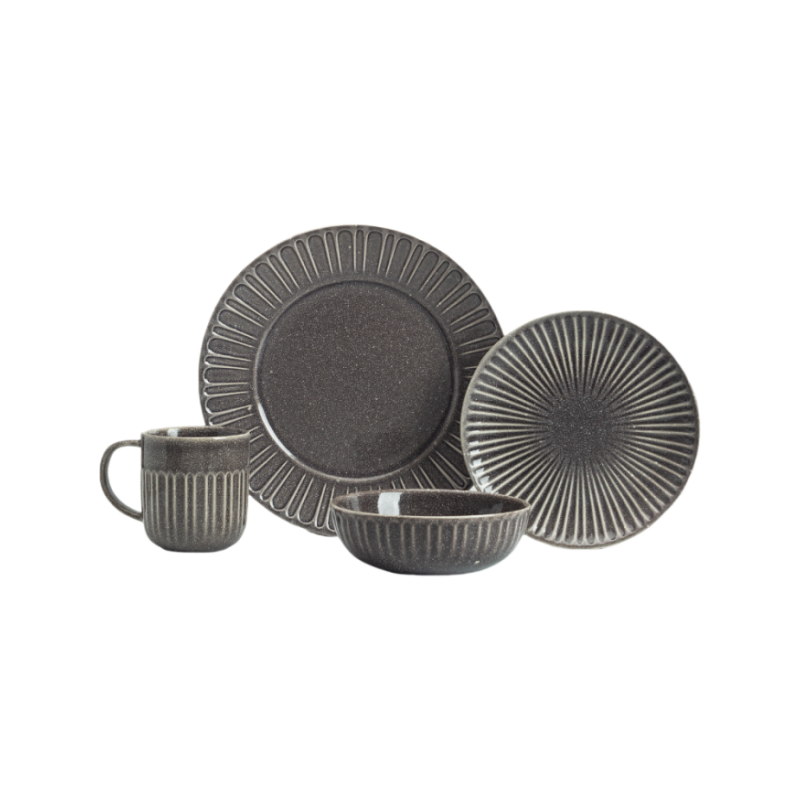
Products in this guide: Grey Reactive Glaze Stoneware 4-Piece Dinnerware Set · Japanese Ceramic Dinnerware Plate – Black Stoneware Dinner Set Style
The number is usually meaningless as stated, because three things are missing: the denominator, the segment, and the evidence standard. Without those, a breakage rate cannot be improved, and it certainly cannot be claimed.
Start with the denominator
Breakage must be expressed against pieces shipped in the same consignment, at the same point of measurement. A rate calculated against ordered quantity mixes two different problems: pieces that were never shipped and pieces that arrived damaged.
The clean definition is: units broken divided by units counted at loading, measured at a stated point. That point matters as much as the ratio. Breakage measured at the port, at the distribution centre, and at the shelf are three different numbers describing three different journeys.
The packaging guide explains how retail-ready and protective layers are specified together.
The four segments that fail
Breakage is not one failure mode. It happens in four places, and each has a different cause and a different responsible party.
In the factory, before packing. Handling damage, rejects that were packed anyway, or ware that failed in the kiln and was not separated. This is a quality control failure and belongs entirely to the supplier.
In the carton, in transit. This is the largest and most debated segment. Causes include insufficient clearance in the insert, cartons stacked beyond their compression strength, poor palletisation, and container movement at sea.
At the dock, during unloading. Dropped pallets, forklift contact, and cartons cut open carelessly. This is a receiving-side failure, and it is frequently folded into the total rate because nobody separates it.
In storage or on the shelf. Overstacking, humidity, and handling by staff. This is an operational failure at the buyer's end, and it should never be reported as a supplier defect.
A single aggregate percentage hides all four. A breakdown by segment is what makes a corrective action possible.
What evidence a claim needs
Damage claims fail for the same reason most claims fail: the evidence arrives after the goods have been moved, mixed, or discarded.
Five items make a claim defensible.
A loading record. Carton count, pallet count, and photographs of the sealed container with a readable seal number.
An unloading record. The same count, taken before anything is moved, with photographs of any visibly crushed carton.
Sample retention. Damaged pieces kept with their cartons and their inner packing, not separated from them. The carton is the evidence; the broken mug alone is not.
A count, not an impression. The number of damaged units per carton, and how many cartons were affected, so the loss can be calculated rather than estimated.
A timeline. The date of arrival, the date of inspection, and the date the claim was raised. Most insurance and most suppliers have a notification window, and it is usually shorter than buyers assume.
The demurrage and customs delay guide explains how arrival costs stay predictable.
Where insurance actually responds
Cargo insurance is often bought with the belief that it covers breakage. Whether it does depends on three things that should be checked before the shipment, not after.
The coverage clause. All-risk cover is broader than named-perils cover, but even all-risk commonly excludes inadequate packing. If the loss is attributed to packing, the insurer will point at the supplier and the supplier will point at the packing specification.
The excess. A deductible per claim can exceed the value of a partial loss. For a consignment where twenty mugs broke, the excess may make the claim pointless, which is why the claim route should be reserved for real losses rather than used as a quality feedback mechanism.
The packing standard in the policy. Many policies require packing to a stated standard. If the shipment used a cheaper packing than the policy assumes, cover can be reduced or declined.
The practical implication is that insurance is not a substitute for packing specification. It covers events, not negligence in the specification.
How to use the number
A breakage rate is only useful if it drives a decision. Three uses are worth building toward.
A threshold in the specification. Agree what rate is acceptable, per segment, and what happens above it. This converts a complaint into a contractual mechanism.
A packaging feedback loop. If breakage is concentrated in one carton configuration or one insert design, the rate points at a design change rather than a supplier.
A freight comparison. A higher breakage rate on a cheaper routing is sometimes still the cheaper outcome, and sometimes it is not. The rate is the input to that calculation, not a verdict on its own.
The honest boundary
Zero breakage is not achievable in ceramics at commercial volumes, and a supplier who promises it is either inexperienced or optimistic. What is achievable is a rate that is measured the same way every time, segmented by cause, and tied to an agreed threshold.
The first step costs nothing: define the measurement point in writing before the shipment, and count at that point. Most breakage disputes are not disagreements about quality. They are disagreements about what was being counted, and where.
Related Products
Explore products featured in this guide:


Have questions? See our Sizes & Finishes FAQ and Ordering & Certifications FAQ.
Need a custom quote? Send an inquiry or browse our full product catalog.

