
Banquet and Catering Ceramics: Volume Planning, Stacking Logic and Breakage Reserve
The Banquet Buy Is a Numbers Game
The banquet and catering order is not a dinnerware order scaled up - it is a different kind of math. The restaurant buys for one service at a time; the banquet operator buys for the simultaneous service: the two hundred covers on a Saturday, the conference coffee break for three hundred, the wedding season that runs twelve weekends in a row (see our hotel-renovation guide for the purchase-timing side, and our hotel-mug-spec guide for the hospitality standard). Every decision - how many pieces, which sizes, which stacking shape - comes back to the same three numbers: the covers per service, the pieces per cover, and the seasons between the replacement orders. This guide reads the banquet category through the operator's numbers: the volume logic, the stacking logic, the service cycle and the breakage reserve that keeps a catering program alive.
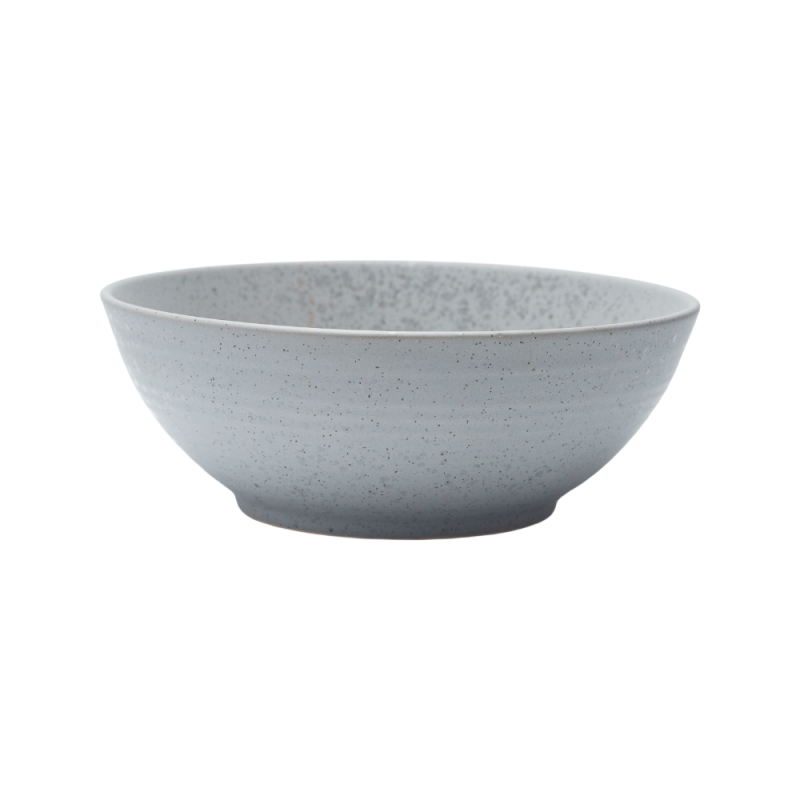
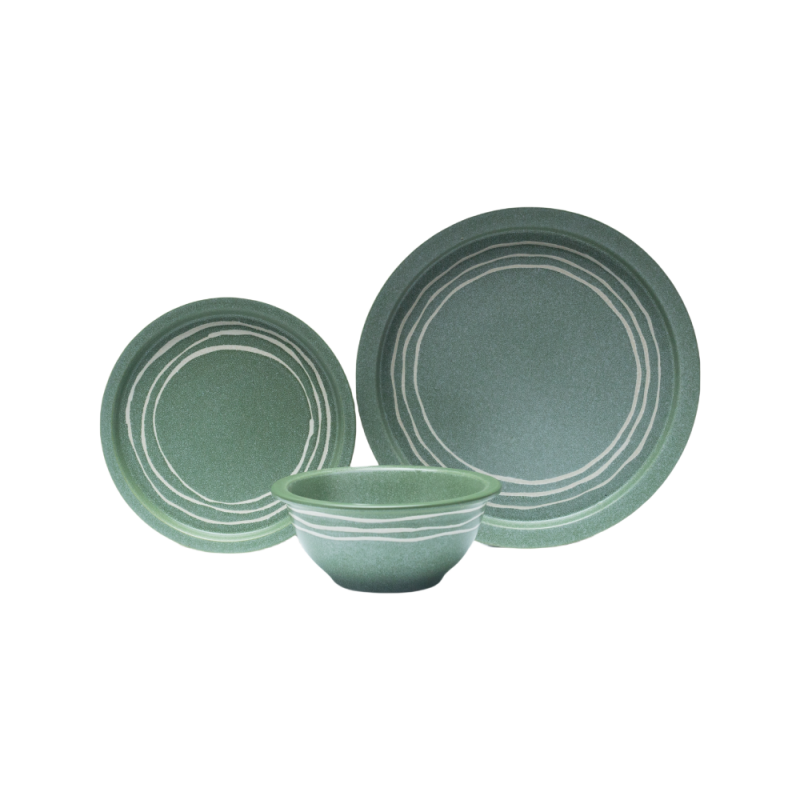
Products in this guide: Nordic Matte Speckled-Glaze Stoneware Bowl · Handcrafted Green Stoneware 3-Piece Set
The Volume Logic: Pieces per Cover, Covers per Service
The banquet volume plan starts with the cover count, and the cover count starts with the menu structure. The plated banquet needs the basic cover set - the dinner plate, the salad or appetizer plate, the soup bowl, the cup and saucer, the bread-and-butter plate - while the buffet banquet runs heavier on the service ware: the chafing-adjacent platters, the serving bowls, the small plates for the self-serve line (see our commercial-china guide for the durability side, and our serving-trend guide for the service-ware logic). The operator's rule is to count in sets, not in pieces: the order is calculated as covers times the pieces per cover, plus the service-ware allowance, plus the reserve - and the number of covers is the peak service, not the average, because the Saturday wedding and the Tuesday seminar share the same inventory (see our first-order guide for the trial-size logic and our volume-modeling guide for the scaling math). The signal: the banquet buyer counts the peak cover, builds the menu-based set, and adds the service ware before the first inquiry.
The Stacking Logic: Same Footprint, Different Services
The second number in the banquet buy is the footprint, because the banquet inventory lives in the cupboard and the service lives on the cart. The pieces that share the same base diameter stack into the same column - the dinner plate on the salad plate on the bread plate - and the operator who buys the stackable range stores three services in the shelf space of one (see our stacking-mug guide for the stacking principle, and our commercial-china guide for the edge design that protects the stack). The stacking logic also decides the cart math: the stack that fits the service cart travels better, the stack that does not fit breaks more often, and the stack that is designed for the dishwasher loads faster (see our dishwasher-guide for the washing side). The signal: the banquet range should be speced by the stack - the same base, the nested sizes, the durable edge - because the footprint is the inventory cost and the cart is the service speed.
The Service Cycle and the Breakage Reserve
The third number is the wear-and-tear number, because the banquet piece lives a harder life than the retail piece: the fast plating, the stacked carts, the dishwasher heat, the constant handling (see our durability-guide for the wear math, and our edge-standards guide for the chip reality). The operator plans the replacement in seasons - the good stoneware range may serve three to five years, the decorated banquet line may need the reorder sooner as the gold and the decals fade under the dishwashing cycles (see our gold-band guide for the decoration wear) - and the replacement is bought against the original order, so the pattern and the glaze need to stay reproducible (see our repeat-order guide for the consistency protection). And above all, the breakage reserve: the smart operator buys the reserve pieces with the first order - the standard practice runs five to ten percent on the service ware, higher on the thin-rimmed pieces - because the second order of a discontinued pattern is the most expensive order in the catalog (see our quote-reading guide for the reorder cost, and our certification guide for the batch documents). The signal: the banquet order should include the reserve percentage in the first PO, not after the first broken season.
The Banquet Checklist for the Operator
The banquet and catering buy closes with a four-point checklist. First, count the covers: the peak service, not the average, with the menu-based set per cover (see our commercial-china guide for the set logic). Second, spec the stack: the same base diameter, the nested sizes, the durable edge, and the cart-friendly footprint (see our stacking guide for the principle). Third, plan the reserve: the five-to-ten percent breakage reserve in the first order, and the reproducible pattern for the season reorder (see our repeat-order guide for the protection). And fourth, verify the factory side: the dishwasher-proof glaze, the edge strength, the stack tolerance and the consistent color across the batch (see our factory-QC guide for the gates, and our color-control guide for the acceptance). The operators who run the numbers buy the banquet range once and reorder it for years - because they bought the volume, the stack and the reserve, not just the plates.
"Banquet-Ready Ceramic Lines"
Explore products featured in this guide:
Have questions? See our Sizes & Finishes FAQ and Ordering & Certifications FAQ.
Need a custom quote? Send an inquiry or browse our full product catalog.