Bakeware Buying Guide: How Big Buyers Buy Oven-Safe Ceramic
Why Bakeware Is a Separate Buying Line
The buyer who masters tableware still finds bakeware a different purchase, because the oven is the harshest environment a ceramic piece meets: the direct flame of the grill, the rapid heat of the convection fan, the cold shock of the freezer-to-oven move, and the abrasive cycle of the commercial dishwasher on the way back. A plate that survives ten years of table service can fail in its third month of oven work, and the failure is not a surface issue but a body-and-glaze issue that the buyer decides at the quotation stage (see our clay-science guide for the body layer, and our defect guide for the crack families). This guide reads the bakeware category through the buyer's eyes: the heat ratings, the glaze requirements, the size system and the procurement checklist that keep a baking line from breaking, crazing or shrinking in the oven.
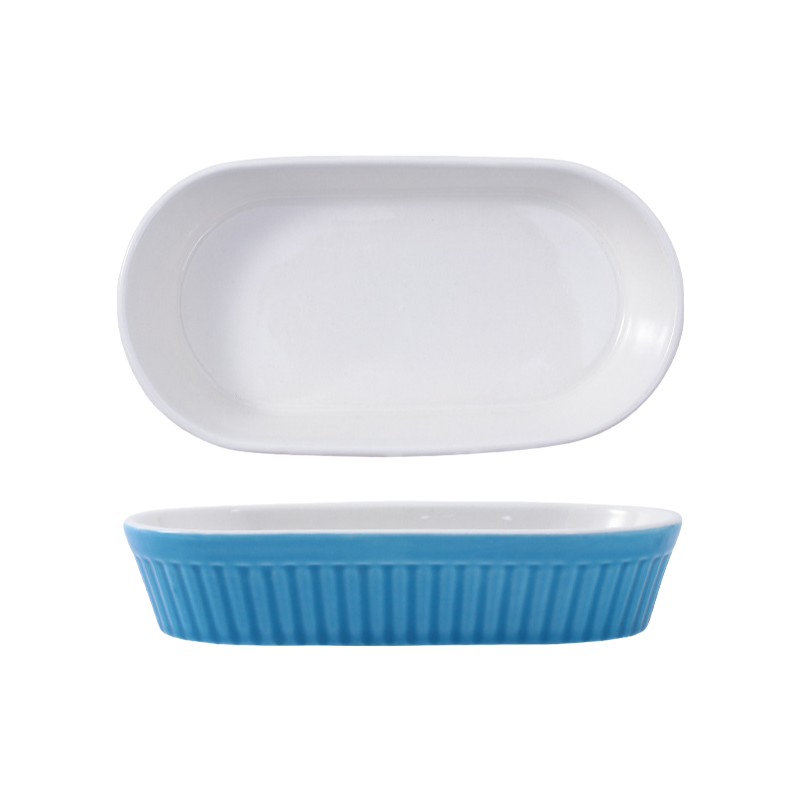
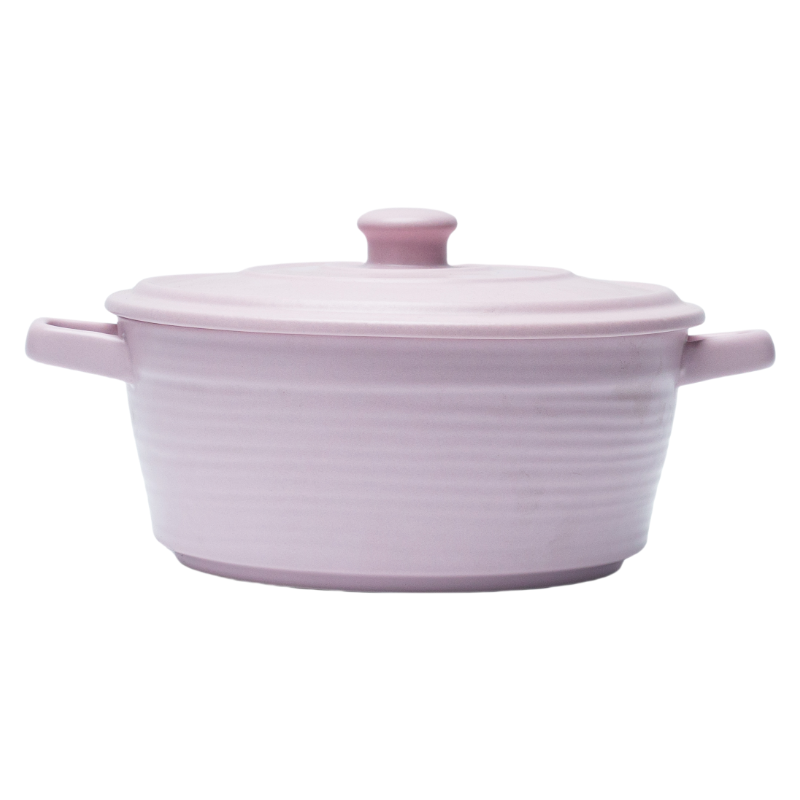
Products in this guide: Ceramic Dessert Bowl · Stoneware Casserole Dish With Lid
Heat Ratings: What "Oven-Safe" Really Means
The first question in bakeware is the heat rating, and the rating is a set of numbers, not a label: the maximum oven temperature the piece can take (usually 200-260°C for the stoneware and the porcelain bodies; see our clay-science guide for the body behavior), the thermal-shock range it survives (the temperature difference the piece can absorb between the hot oven and the cold countertop), and the direct-heat limits (most bakeware is not flame-safe, and the label "oven-safe" does not cover the open flame). The heat rating lives in the body and the glaze together: the vitrified stoneware handles the oven well, the thermal-shock behavior depends on the body's density and the glaze's expansion match, and the crazed or the cracked glaze is the first warning that the piece is running past its thermal range (see our glaze-science guide for the expansion logic, and our defect guide for crazing). The signal for the buyer: ask for the piece's specific numbers - the maximum temperature and the thermal-shock figure - not for the word "oven-safe", because the word is used loosely and the number is what the menu planning and the kitchen training depend on.
The Glaze Under Stress
The glaze is the second variable in bakeware, because the oven multiplies every glaze weakness: the crazing that stays invisible on a serving plate becomes a food-safety question when the piece cycles through the oven and the dishwasher; the glaze that is fine at the table service can develop the hairline cracks that trap the food residue under heat; and the metallic decorations - the gold, the silver and the metallic rims - are not oven-safe at all, and the buyer should check the decoration before the piece is specified (see our defect guide for the crazing family, and our safety guide for the food-contact rules). The bakeware glaze must also meet the food-contact regulations of the destination market, and the buyer should ask for the glaze's certification - the lead and cadmium compliance, the food-grade statement - at the sample stage, because the glaze is tested on the fired piece and the compliance is not visible to the eye (see our certification guide for the documents, and our factory-QC guide for the test records). The signal: the bakeware line should be specified with the food-grade glaze, the no-metallic-decoration rule for the oven pieces, and the glaze's thermal performance written into the specification sheet.
The Size System: From the Ramekin to the Casserole
The third variable in bakeware is the size system, because the baking line is bought as a set: the ramekin and the baking bowl in the dessert range, the pie dish and the quiche dish in the pastry range, the casserole and the baking pan in the kitchen range, and the sizes must stack, portion and fit the ovens and the menus (see our size-guide for the standard capacity system). The size is quoted in the capacity (the ml or the oz for the ramekins and the bowls) and the diameter (the cm or the inch for the pie dishes and the casseroles), and the buyer should check three things: the capacity consistency across the set (the 120 ml ramekin from one factory is not the same as the 120 ml from another, and the portion control depends on the real capacity), the stacking geometry (the pieces that stack for the storage and the transport save the shelf and the container space; see our container guide for the packing logic), and the lid system (the casseroles with the matching lids, and whether the lids are bought as the spare parts). The signal: the bakeware set should be specified in the capacity and the diameter with the real fired dimensions, and the samples should be checked with the measuring - the capacity test, not the visual check - because the bakeware portion control is built on the size that is written in the spec (see our chain-standard guide for the tolerances).
The Bakeware Procurement Checklist
The bakeware line closes with a four-point checklist. First, the heat rating: the maximum oven temperature and the thermal-shock range written into the spec, not the loose "oven-safe" label (see our quote-reading guide for the spec line). Second, the glaze: the food-grade glaze, the no-metallic-decoration rule for the oven pieces, and the compliance certificates at the sample stage (see our certification guide for the document list). Third, the size system: the capacity and the diameter in the real fired dimensions, the stacking geometry, and the lid system confirmed (see our size-guide for the capacity standard, and our mold-engineering guide for how the fired size is set). And fourth, the batch consistency: the body and the glaze locked at the sample stage, and the production batch rechecked for the size, the color and the heat behavior, because the bakeware failure - the crack, the crazing, the shrinking - is the class of defect that shows in the oven, after the container has shipped (see our factory-QC guide for the batch checks, and our container guide for the inspection reality). The buyers who run the checklist before the order are the buyers whose bakeware lines survive the oven, the dishwasher and the menu - because they bought the bakeware by the numbers, not by the picture.
"Oven-Safe Ceramic Bakeware"
Explore products featured in this guide:
Have questions? See our Sizes & Finishes FAQ and Ordering & Certifications FAQ.
Need a custom quote? Send an inquiry or browse our full product catalog.