4-Piece vs 6-Piece Dinnerware Sets: What Retail Buyers Pick
4-Piece vs 6-Piece Dinnerware Sets: What Retail Buyers Pick
Walk through any homeware section and you will see the same question being answered on the shelf: 4 pieces or 6? It is one of the most fundamental decisions in dinnerware retail, and it shapes price points, margins, and what actually sells.
This guide compares the two formats honestly — what each is for, who buys each, and how to structure your assortment so both work for you.
The Two Formats, Defined
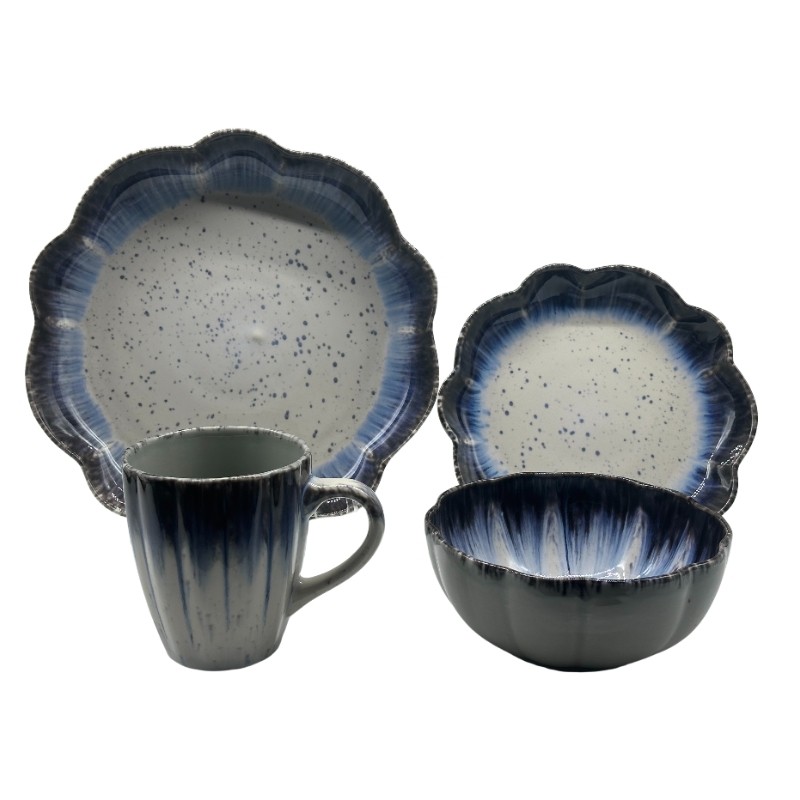
4-piece sets are typically one plate, one bowl, one side plate, and one mug — a place setting for one person. They are compact, affordable, and easy to gift.
6-piece sets usually add a larger dinner plate and a serving piece (or add place settings), giving a fuller service. They are the "complete dining" option.
The choice between them is not about which is better. It is about which customer you are serving.
Who Buys 4-Piece Sets
The 4-piece set is the entry point and the gift format:
- First-time buyers. Students, new households, and people furnishing a rental buy 4-piece sets because they are affordable and complete enough to start.
- Gift buyers. A 4-piece set is a manageable, presentable gift. It is easy to wrap, easy to carry, and fits a mid-range gift budget.
- Small kitchens. People with limited storage choose compact sets over full service.
- Match-and-mix customers. Some buyers deliberately buy multiple 4-piece sets in different colors to build a curated, mixed table.
Who Buys 6-Piece Sets
The 6-piece set is the upgrade and the everyday-dining choice:
- Established households. Families replacing old dinnerware want a fuller service — more plates, more bowls, enough for guests.
- Table-setting enthusiasts. Buyers who entertain want a set that covers a real table.
- Higher-ticket buyers. A 6-piece set naturally carries a higher price and reads as more premium than a 4-piece.
- Move-in and renovation customers. People setting up a new home kitchen often buy the larger format first.
Price and Margin Reality
The price ladder matters more than the piece count:
| Format | Typical retail band | Per-piece value | Giftability |
|---|---|---|---|
| 4-piece | $26-40 | Higher per piece | High |
| 6-piece | $40-70 | Lower per piece | Medium |
| 8+ piece (service) | $70+ | Lowest per piece | Low |
A 4-piece set earns more per piece, but a 6-piece set earns more per transaction. The winning retail strategy is usually to carry both: the 4-piece as the entry and gift item, the 6-piece as the step-up.
How Retailers Structure the Assortment
Lead with the 4-piece for gifting. In Q4 and around gifting seasons, the 4-piece set is the volume seller. Stock colors that photograph well and gift-ready packaging.
Use the 6-piece to raise the basket. The step from 4 to 6 pieces is the natural upsell. Shelf them adjacent, with clear size and price signaling.
Add a service set above. An 8-16 piece service set (like a 16-piece reactive glaze set) captures the top of the ladder and anchors the range's premium perception.
Keep the pattern family consistent. The same decoration across 4, 6, and 16-piece formats lets buyers trade up within one look — this is how retailers maximize attachment rates.
What to Check When Ordering Sets
Consistency across pieces. In a set, every plate, bowl, and mug must match in shade and size. Confirm how the factory controls consistency within a run — this is the most common set complaint.
The mug makes or breaks the set. In most ceramic sets, the mug is the piece customers handle most and the one that varies most. Confirm handle comfort and capacity on the mug.
Packaging as part of the product. Sets are often sold as gifts. Ask about retail-ready packaging: does it present well on the shelf? Is it strong enough for shipping?
Breakage rates. Sets ship as multiple pieces in one carton. Ask about packing design and your expected breakage allowance.
How to Position Sets for Your Market
For e-commerce: lead with the full-set photo. Show every piece laid out. Buyers need to see the complete set to judge value.
For gift retail: lead with presentation. If your 4-piece comes in a ready-to-gift box, say so. It closes sales.
For hospitality: skip the retail logic. Hotels and cafés buy sets differently — they care about durability, stackability, and replacement availability, not piece-count laddering.
Working with Storiware Ceramic Mugs
Storiware Ceramic Mugs produces dinnerware sets from 4-piece through 16-piece formats, in matte, reactive, and classic finishes — with consistent decoration across a range so your customers can trade up within one look.
When you work with us:
- We confirm piece-to-piece consistency in samples before production
- Our mug quality is held to the same standard as our standalone mugs
- We support retail-ready packaging for gift channels
- Set packing is designed to minimize breakage across multiple pieces
Summary
The 4-piece versus 6-piece decision is a retail structure question, not a quality question. The 4-piece is your entry and gift format; the 6-piece is your step-up. Carry both, keep the pattern family consistent, and add a service set above to capture the full ladder.
Order sets with consistency and packaging in mind, and let the two formats work together. And when you are ready to produce, Storiware Ceramic Mugs is here to help you build a dinnerware range that sells at every level.
Featured Sets from Storiware Ceramic Mugs
Explore products featured in this guide:
Need a custom quote? Send an inquiry or browse our full product catalog.