2027 Ceramic Sourcing Outlook: Building a Regional Procurement Map
A Regional Map Beats a Regional Forecast
Ceramic sourcing plans for 2027 should start on a map, not a factory directory. A map says who is buying, which channel the order travels through and which documents travel with it; a directory only says who can make the mug. For importers and brand decision-makers, this closing outlook of our P-series deep dives sets that map before the sample round starts.
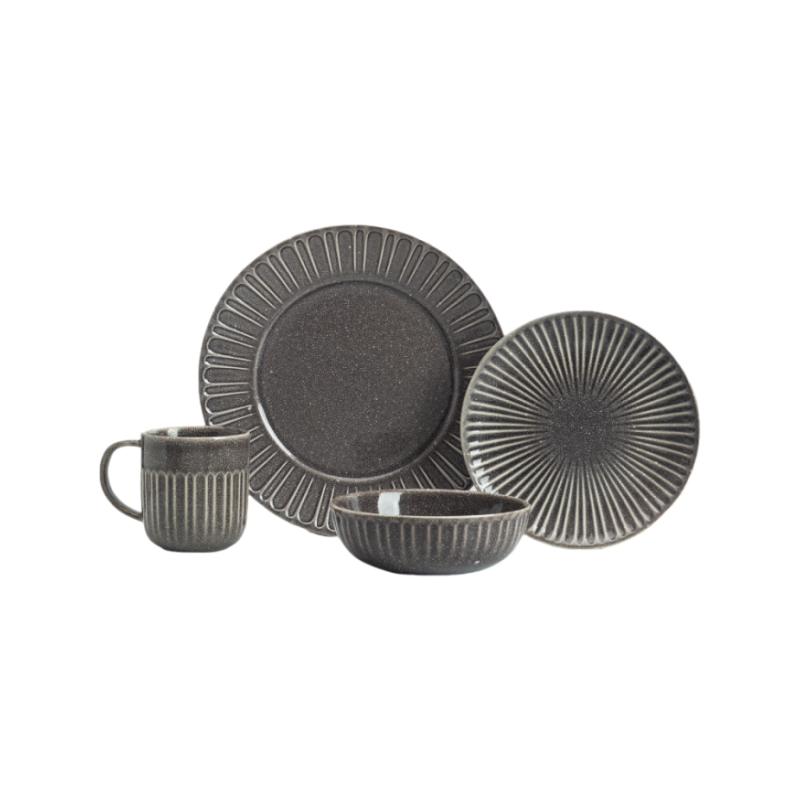
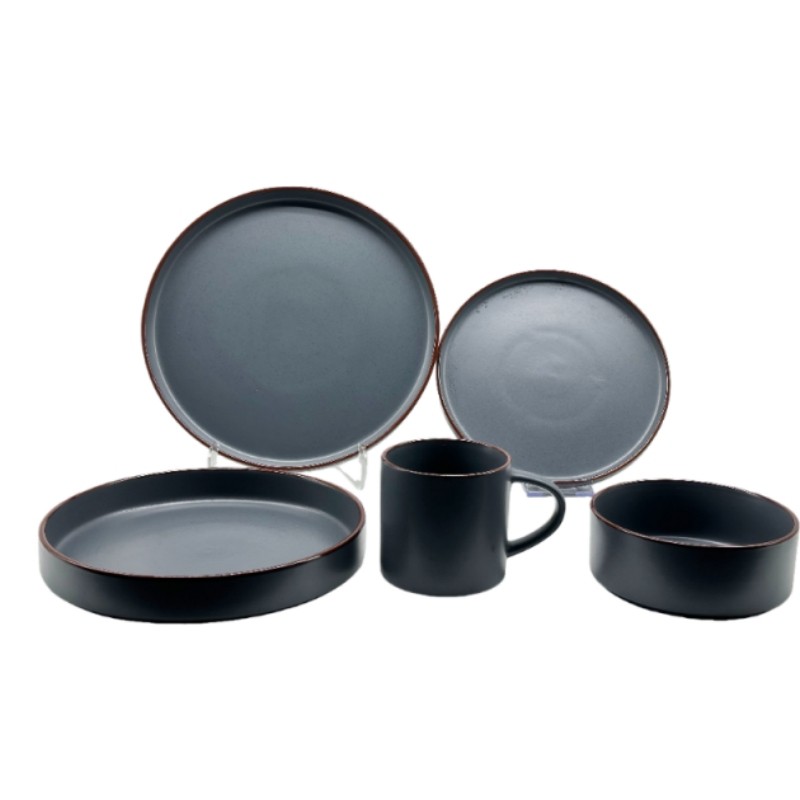
Products in this guide: Grey Reactive Glaze 4-Piece Dinnerware Set · 5-Piece Matte Stoneware Dinnerware Set
The outlook adds no new statistics. It consolidates the signals already mapped in the country and region guides published alongside it, from the first batch for Australia, Canada, Germany, France and the Benelux to the companions for the Nordics, Central and Eastern Europe, Japan and South Korea. The language is deliberately about signals and worth-watching trends, not forecasts. Nothing here is legal advice; the mechanisms cited reflect official public sources as of September 2026, and where a rule is revised periodically, the version in force at the time of ordering governs.
Signal Scan: Australia, New Zealand and Canada
Two coffee economies on opposite hemispheres lead the scan; both buy café- and food-service-grade mugs and cups year-round, not only at holiday peaks.
Australia and New Zealand. Who buys: importers and brands serving independent cafés and national chains, plus food-service buyers running all-day breakfast programs. Takeaway-coffee culture and Melbourne's café scene keep demand for quality mugs, takeaway cups and cup-and-saucer sets steady, and grocery private label adds a quieter channel. Files run lighter than in the EU: there is no unified positive list, safety is governed by the general provisions of the Food Standards Code, and the Australian standard AS 4371:2012 is the lead-and-cadmium reference large retailers write into acceptance criteria. Country-of-origin marking, wood-packaging biosecurity under ISPM 15 and GST at clearance are the routine to plan. Year-end gifting still lands in the southern summer, so the ordering clock runs opposite the northern hemisphere.
Canada. Who buys: importers feeding coffee chains, specialty cafés and a food-service scene built on brunch and multicultural dining. Two features separate Canada from the shelf next door: English-French labeling is the retail baseline, with Québec expecting complete French information, and the Glazed Ceramics and Glassware Regulations (SOR/2016-175) under the Canada Consumer Product Safety Act set lead-and-cadmium migration limits by product category. New entrants are most often caught by the detail rules, stricter treatment for drinkware with decorated rims and the exemption for decorative pieces only with a permanent bilingual warning, so buyers specify food-contact versus decorative purpose on the spec sheet. The ordering calendar follows the northern gift season.
Signal Scan: Germany, France and the Benelux
In the EU's retail core, volume concentrates in fewer, bigger hands while design-led gifting keeps a long tail alive.
Germany and the German-speaking region. Who buys: the private-label programs of discount grocery chains and supermarket groups, the steadiest source of large orders in the region, plus hospitality tied to beer culture and rotating tableware. Files: an LFGB report under the German food-contact provisions, where sensory testing is the point that separates it from a plain lead-and-cadmium report, German-language product data, and the EU declaration of conformity beneath it all. Ambiente in Frankfurt anchors the early-year giftware and tabletop calendar on dates the organizer publishes each year.
France. Who buys: hypermarket and supermarket groups, a strong gifting-and-lifestyle retail network, and food-service operators where the table-setting culture makes presentation a purchasing criterion. France runs on the EU framework, declaration of conformity, labeling and a GPSR responsible person in the EU, with consumer information in French as the practical gate. Maison&Objet near Paris gathers the gifting and lifestyle trade twice a year on the organizer's published calendar.
The Benelux. Who buys is less the end consumer than the distributor: importers landing at Rotterdam or Antwerp and feeding Germany, France and Central Europe through the single market. The files that matter are the EU set, the DoC, a GPSR responsible person and multi-language neutral packaging, because one shipment splits onto Dutch-, French- and German-speaking shelves. Sustainability pressure on packaging runs high, while Dutch takeaway-coffee habits and Belgian gift traditions keep a real home market alive.
Signal Scan: the Nordics and Central and Eastern Europe
The EU's northern and eastern edges reward different plays: sustainability and design leadership in one case, channel reach and price tiers in the other.
The Nordics. Who buys: retail and food-service groups that write environmental criteria into purchasing policy, design-led gift retailers, and hospitality built on hotel breakfast and all-day coffee. Sustainability is a channel-access topic: the Nordic Swan ecolabel is the endorsement buyers ask about, while clean lines and natural matte tones carry the design argument. Compliance follows the EU framework, with Norway aligned through the EEA. Christmas is the largest gifting window, with a summer outdoor-dining season on top.
Central and Eastern Europe. Who buys: importers and distributors serving modern retail, international chains and discount formats with deep penetration in Poland, alongside local channels, with a clear price split between volume mainstream and premium gifting. Food-service and café culture are expanding, and because the region has a ceramic tradition of its own in Poland's Bolesławiec district, imported ranges compete on design, specification and cost. The EU framework applies directly; consumer information in Polish, Czech or Hungarian is the practical requirement; Christmas gifting and an Easter-to-spring dining refresh mark the year.
Signal Scan: Japan and South Korea
East Asia is where documentation becomes part of the product and gifting becomes part of the annual plan.
Japan. Who buys: trading houses and importers, coffee chains and specialty shops with an exacting takeaway-cup culture, general-merchandise and kitchenware retail, and a hospitality trade with the highest expectations of finishing quality in the series. What makes Japan structurally different is gifting: the temiyage habit and the mid-year and year-end gift seasons keep boxed sets and cup-and-saucer combinations selling well beyond the holiday months. Files: the Food Sanitation Act regulates food-contact articles by material-specific specifications, and ceramic articles are tested for lead-and-cadmium dissolution by article category, so buyers ask the supplier for reports issued to the Japanese specifications. The synthetic-resin positive list, fully enforced since June 2025, leaves plain ceramic outside its scope but covers resin lids and seals on composite pieces, which must be confirmed with their documentation; a mid-2026 revision updated test conditions and dissolution specifications, making the latest official notice the ordering reference. Japanese-language labeling and product data are the baseline.
South Korea. Who buys: importers and brands serving a coffee culture of exceptional chain and specialty density, plus holiday gift boxes, brand-merchandise mugs and fast e-commerce and duty-free channels, where local-brand pride drives custom design. Files: the MFDS standards and specifications for food utensils, containers and packages set material-based rules, with ceramic articles tested by category for lead-and-cadmium dissolution; unlike Japan, Korea keeps no licensing or positive list. Its practical levers are procedural: foreign factories can apply for advance registration to ease import inspection, and first imports usually require full-item testing, so certificates from an accredited laboratory should exist before the first container is booked. Korean-language labeling completes the picture.
The Documentation Floor Rises in Every Direction
Read across the nine scans and one direction is consistent: the documentation demanded of a ceramic shipment only rises. In the EU the floor is already the declaration of conformity, correct labeling and a GPSR responsible person inside the union, and a single point of accountability makes the responsible-person question a pre-order one. Japan adds material-specific specification compliance, the resin positive list for composite pieces and a specification baseline revised in mid-2026; Korea adds MFDS compliance with first-import full-item testing and an advance-registration option. No market is moving toward fewer papers.
For a multi-region program the effect compounds, so file requirements belong in the contract and in the supplier's scope of work, not in an email after production starts. That through-line links the country guides behind this outlook with our market comparison of North America, Europe and the Middle East: geography decides the paperwork, and the paperwork is no longer optional anywhere.
The Channels Moving First
Five channel signals recur across the regions, and each tells a sourcing team where to put planning effort first.
Private-label retail. The German-speaking region's private-label programs are the steadiest large-order source in the series, and grocery private label appears again in Australia and New Zealand. These are annual programs with formal specifications, so they reward a supplier that holds consistent quality across repeat runs.
Gifting programs. Japan's mid-year and year-end seasons, Korea's holiday gift boxes, France's gifting-and-lifestyle retail and the near-universal Christmas window all buy in defined peaks. Gifting is where timing precision and packaging quality decide whether an order sells through.
Coffee chains and specialty. From Australia and Canada to Japan, Korea and the Nordics, coffee-driven buyers appear in every scan, and Central and Eastern Europe shows the same expansion. Coffee is the most reliable cross-region demand, and it asks for consistent spec, food-contact files and room for branding.
E-commerce and duty-free. Strongest in Korea, this channel publishes the product before the customer sees it, so images, specifications and compliance statements must match the physical goods exactly.
The distribution hub. The Benelux model shows what consolidation looks like: importers landing once and feeding several EU markets, which works only when the documentation spine is uniform across the program.
The pattern worth watching is overlap: one gifting-grade mug or food-service cup can serve several of these channels at once when spec and files are region-aware from the start.
Reading the 2027 Sourcing Calendar Backwards
Every buying season is a fixed point in the future. Production takes months, sea freight runs in a window of several weeks, ports and deconsolidation add more, and stock must reach the shelf before the first promotional week. So set order dates by reading the calendar backwards: start from the moment the goods must be in the channel, then subtract production time, the shipping window and a buffer.
The shared anchor is year-end gifting. Christmas is the one season present across nearly every region in this series, and an order aimed at the year-end gift shelf is placed quarters earlier. Around that anchor the regional calendars diverge, so the practical planning device is one window table per program:
| Calendar anchor | Where it shows up | Planning implication |
|---|---|---|
| Year-end gifting | Every region in the series | Place the order quarters before the shelf date |
| Early-year tabletop and gift fairs | Germany (Ambiente), France (Maison&Objet) | Fair dates set the sampling and quoting rhythm on the organizer's published calendar |
| Mid-year and year-end gifting | Japan | Two distinct peaks, so two planning windows in one year |
| Holiday gift boxes and café season | South Korea | Lunar-new-year and autumn boxes plus a Christmas café peak |
| Summer outdoor dining | The Nordics and northern Europe | A second, smaller window after the winter season |
| Offset southern summer | Australia and New Zealand | The same product line feeding a second calendar |
Confirm trade-fair and season dates against the organizers' published calendar for the year in question; the table's point is the logic, not a fixed date.
A Supply Chain That Can Answer the Map
A regional map pays off only if the supply side can answer it, and in ceramic sourcing that means three disciplines.
Formulation lock. The glaze recipe, clay body and decorating route that passed the migration and sensory tests are the ones the channel accepted. Any change, a glaze substitute, a kiln adjustment or a new pigment lot, can shift color and, at the compliance edge, test results. So lock the formulation in the specification and treat any change as one to be approved, re-tested when specification-critical and recorded.
Change management. The difference between a routine program and an incident is usually a change nobody logged. Written notice before the change, samples retained on both sides and re-verification of anything compliance-relevant turn a manageable risk into a handled one.
Documents that travel with the goods. The declaration of conformity, labels, test reports and responsible-person records are part of the deliverable, and they must match the shipment. This is where our guide to building a standing trade compliance file pays: a file kept per market, updated when rules change and reused order after order, instead of reassembled under deadline. With the map spanning several regulatory systems, these disciplines apply to every destination at once, which is where a full-range supplier running standard products across those systems earns its keep.
A 2027 Action List for Decision-Makers
- Choose the map before the line: pick the two to four regions whose channel mix fits your program rather than chasing every signal at once.
- Name the buyer, the channel and the file set for each region, the three questions every guide in the series answered.
- Set the calendar backwards: mark the gifting windows and trade fairs that matter to you, dates as organizers publish them, then work back to sample, order and shipment milestones.
- Test the documentation early: confirm the supplier can issue an EU declaration of conformity with a GPSR responsible person, reports to the Japanese specifications including resin-composite checks, MFDS-ready certificates, and bilingual or local-language labeling, before the deposit rather than after.
- Lock the formulation and the change rule into the contract, with written notice for any change and retained samples on both sides.
- Keep one standing compliance file per market and update it when rules change, so the next order starts from a current baseline.
- Treat freight as a window rather than a number: plan in ranges of weeks and hold buffer stock for peak gifting seasons.
- Re-read the guides behind this outlook before finalizing ranges: the first batch for Australia, Canada, Germany, France and the Benelux, the second for the Nordics, Central and Eastern Europe, Japan and South Korea.
The mechanisms and institutional details in this outlook reflect official public sources as of September 2026. Regulation moves, trade-fair calendars move and channels move; the map built this quarter is a working document, not a monument. What makes it durable is the habit this series has argued for throughout: decide per region who buys, which channel leads and which files ship with the goods, and let the supplier answer all three before the kilns run.
"Plan Your 2027 Program with a Full-Range Supplier"
Explore products featured in this guide:
Have questions? See our Sizes & Finishes FAQ and Ordering & Certifications FAQ.
Need a custom quote? Send an inquiry or browse our full product catalog.